

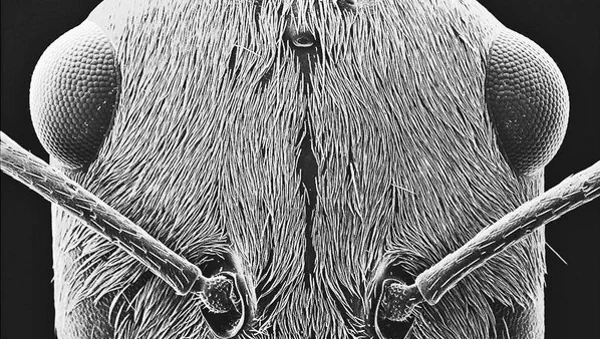
In 2016, the founders of Hong Kong climate-tech company i2Cool began exploring passive radiative cooling technology, drawing inspiration from the unique properties of Saharan silver ants. A decade later, their developments are helping people in different regions cope with extreme heat by reducing the thermal load on buildings and equipment without using electricity.
The Saharan silver ant Cataglyphis bombycina lives in extreme heat and, according to zoologists, is considered the fastest among ants. Researchers from Columbia Engineering, the University of Zurich and the University of Washington found that the special structure of the hairs on the insect’s body enables it to:
reflect solar radiation ☀️
simultaneously emit heat in the infrared range
This biological solution formed the basis for creating flat optical coatings with:
high reflectance in the solar spectrum
efficient heat dissipation in the thermal range
In 2020, i2Cool, founded by specialists from the School of Energy and Environment of City University of Hong Kong, obtained international patents for a composite passive radiative cooling paint. The material:
reflects incoming solar radiation
releases thermal energy through the atmospheric window of the mid-infrared range
provides continuous surface cooling without consuming electricity and without using a refrigerant
Later, the product line expanded with:
coatings
membranes
window films
textiles
These solutions are already used in more than thirty countries, including Australia.
In August 2026, the range was expanded with CorroCool — an anti-corrosion coating for:
metal structures
outdoor electrical cabinets
industrial equipment
The technology does not replace an air conditioner or a VRF/VRV system; instead, it reduces incoming solar heat, lowering the load on existing cooling equipment and ventilation. In places where mechanical cooling is unavailable or too expensive, the coatings provide passive thermal protection. As noted by i2Cool co-founder and CEO Professor Martin Zhu, such solutions are becoming an important part of resilience strategies against increasingly frequent heat waves.