
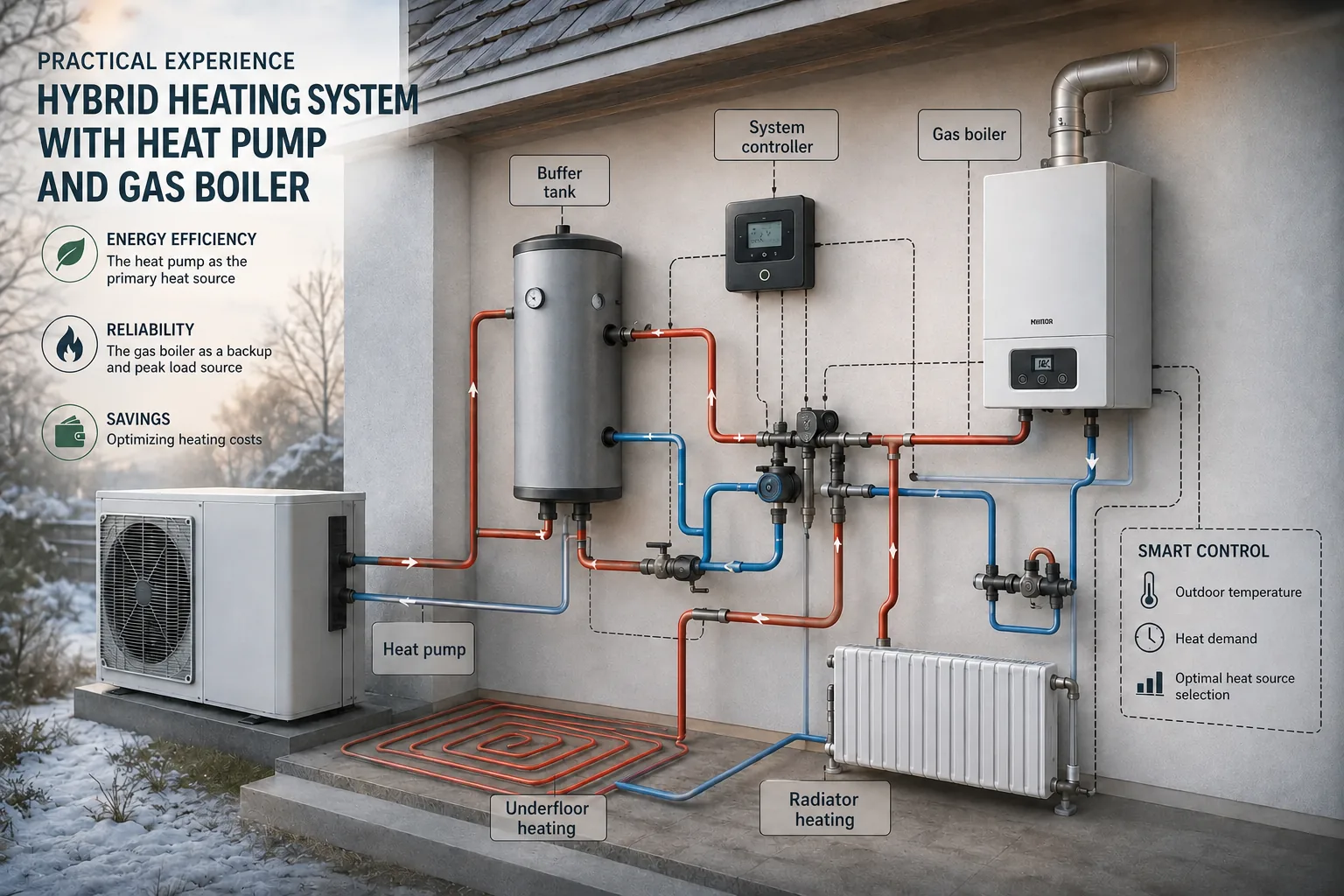
The new 3.7 kW Interion hybrid heat pump, installed indoors, from ATAG, operated for a year in the home of employee Roy Janssen. This is a semi-detached house built in the 1970s with the original radiators still in place. Janssen shares monitoring data, including information on the interaction with the central heating boiler. He also compares his heating system with previous systems.
In March 2025, the 3.7 kW Interion heat pump was installed in the attic of Roy Janssen’s house, the Head of Product Management at ATAG. Interion is a new heat pump from ATAG designed for indoor installation. Because the heat pump must be connected to outdoor air through two air ducts, the attic is often the best place to locate it. The connection is needed to supply air through the evaporator. Unlike ventilation heat pumps (see the inset), the heat pump does not use indoor air.
House
The semi-detached house, built in 1976, with an area of 150 m², is designed for five people; cooking is done on gas. The heating system consists of old radiators (type 22) connected to the heat pump and a new ATAG iQ boiler via welded steel pipes with 3/8-inch connections. In addition, the house is fully fitted with HR++ double glazing, and the roof is insulated with mineral wool panels. The cavity walls are (moderately) insulated.
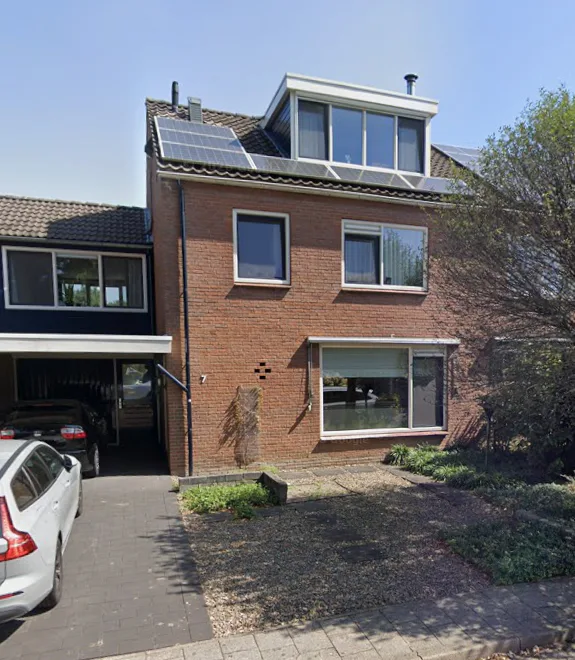
Roy Janssen’s house.
Hybrid system
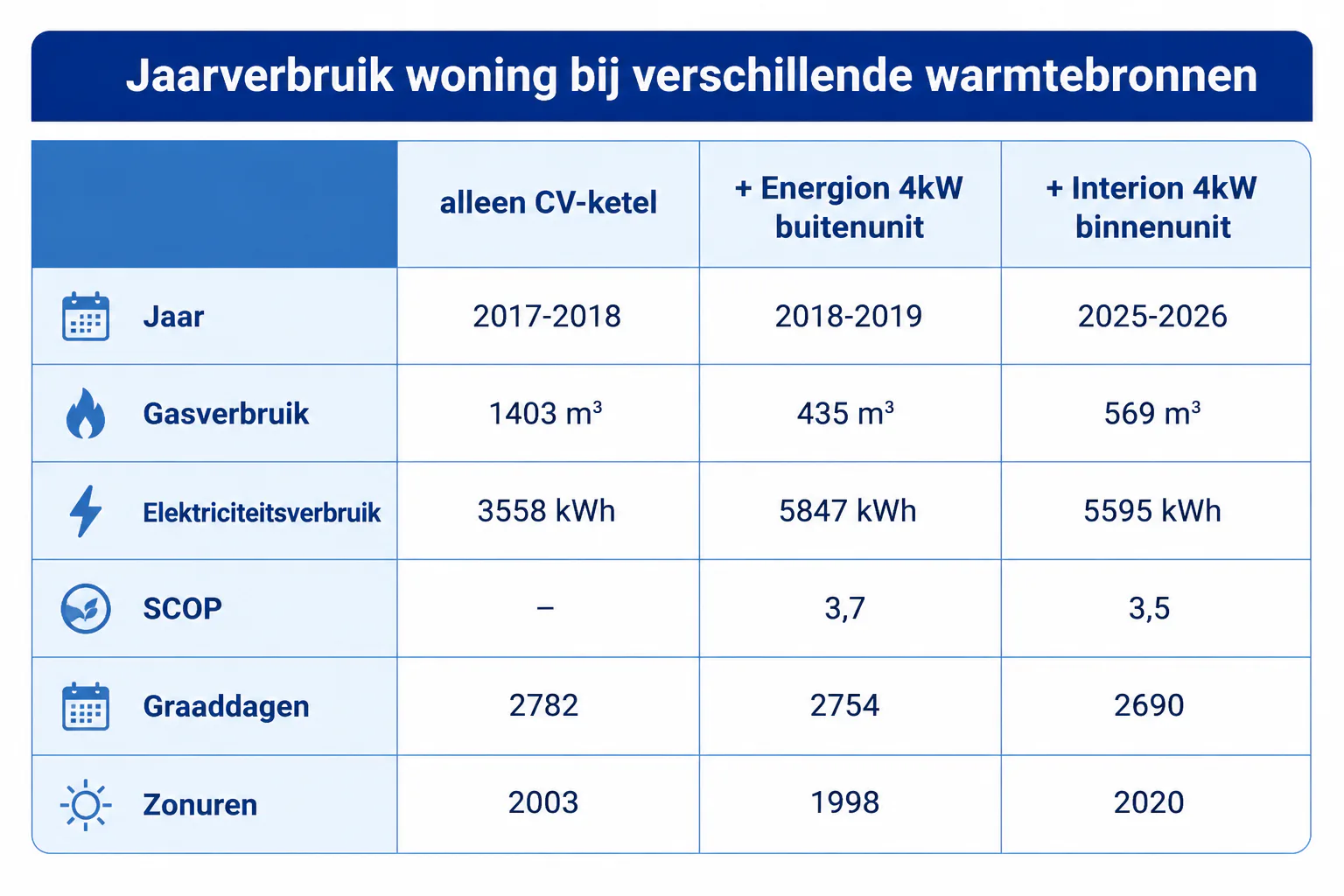
Originally, the house was heated by a gas boiler. In 2018, an air-to-water heat pump was installed, creating a hybrid system. The table below shows that this reduced gas consumption by 968 m³ (9,465 kWh), while electricity consumption increased by 2,289 kWh due to the heat pump. The seasonal coefficient of performance (SCOP) was 3.7. In 2025, the air-to-water heat pump was replaced with Interion, after which gas consumption increased again by 134 m³.

“Interion” in the attic (not at Janssen’s company).
Lower SCOP
After switching to Interion, the seasonal coefficient of performance (SCOP) decreased slightly to 3.5. According to Janssen, this is the result of suboptimal airflow in the ducts and the evaporator. “The reason a heat pump with an outdoor unit has a higher SCOP is that the air has free flow and can therefore move relatively easily through the evaporator. As a result, the heat pump can absorb more energy.” Although the outdoor unit can be more efficient, its placement and noise level can be obstacles. Janssen: “These issues are eliminated when using a heat pump with an indoor unit, but it means you will have to accept a slightly lower seasonal coefficient of performance. That is simply the truth.”
Interaction analysis
The ATAG heat pump system is equipped with software and numerous sensors that make it possible to monitor its operation effectively. In addition to all temperatures, for example, the heat pump’s operating frequency is also monitored. Monitoring with the Interion system made it possible to thoroughly analyze the interaction between the central heating boiler and the heat pump. They also operate in parallel mode; that is, if the heat pump is no longer able to provide sufficient output, the central heating boiler switches on and the heat pump continues running. In this configuration, the heat pump takes the leading role and, together with the pump, ensures heat distribution through the heating system. This parallel mode works well as long as the return-water temperature is low enough. After all, this allows the heat pump to deliver heat with high efficiency.
Why not use ventilation air as the source?
In the Interion system, ventilation air is not used as the heat source, even though it offers a substantial advantage. Namely, this air is warmed, meaning the heat pump requires less energy to reach higher temperatures; consequently, this leads to a higher coefficient of performance (COP). However, according to the company, ATAG makes a different choice because the heat pump cannot extract a sufficient amount of energy from indoor air. The company states that the required 850 m³/hour cannot be achieved using ventilation air alone. In addition, air extracted from the house, especially from the kitchen and bathroom, causes contamination of the evaporator. The company also notes that the airflow from the ventilation system and the heat pump airflow interact poorly. Pressure differences often occur, leading to unstable airflows and potentially to vibrations or resonance. This negatively affects acoustic performance, which is extremely important for a heat pump.
Stepping up gradually
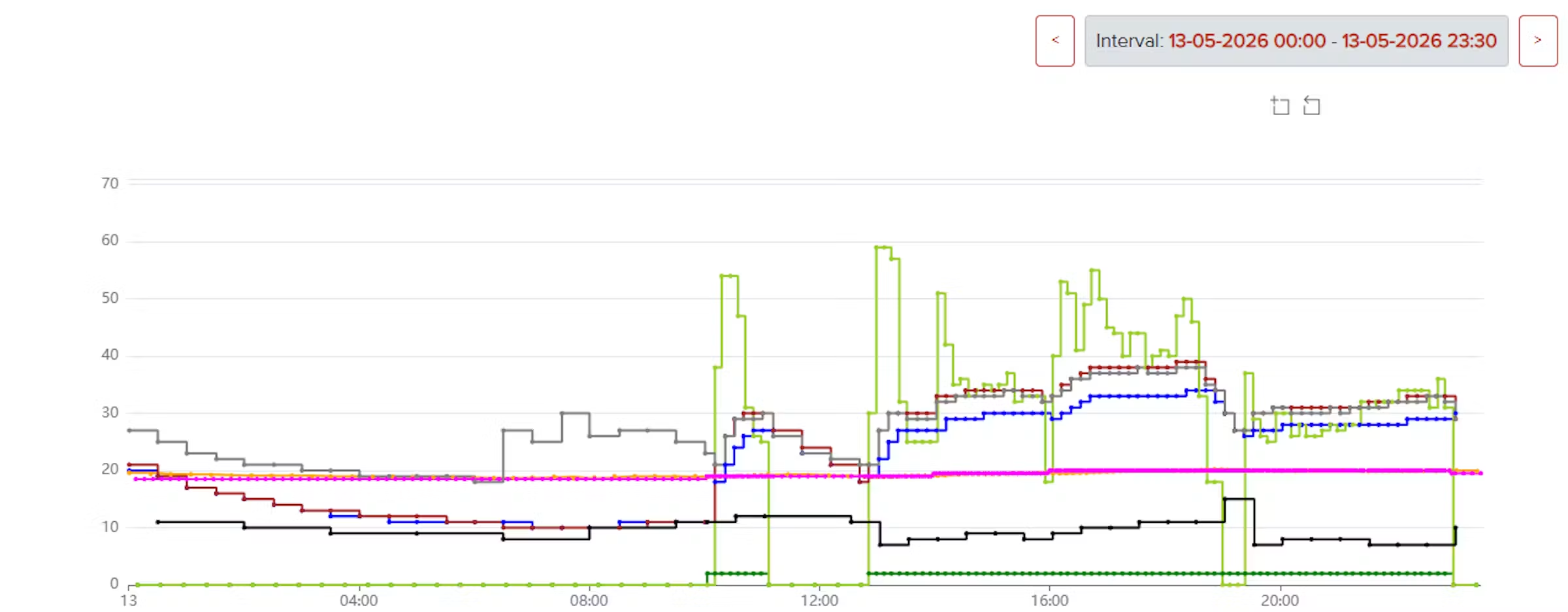
The system provides for reducing the temperature at night to 18.5°C. In the morning, the temperature is raised, but with very small increments, and 20°C is reached only by evening. The fact that the indoor temperature is not brought to 20°C as quickly as possible is related to maximizing heat pump efficiency, which is the objective. Janssen: “To maintain the highest possible coefficient of performance (COP), it is important to take outdoor air temperature into account. The higher the temperature, the higher the COP. Therefore, it is better to make the heat pump work harder when the outdoor air temperature reaches its maximum. This happens in the second half of the day.”
Auxiliary actions
On a typical winter day, the supply temperature is about 40°C. In this case, according to the heating curve, it is sometimes necessary to switch on the central heating boiler. Janssen: “When needed, the boiler switches on for short periods, slightly raising the indoor temperature before the heat pump starts running independently again. On a typical winter day the boiler contributes several times a day, but on cold days this can increase significantly, as the boiler also runs longer.”
The heat pump runs for shorter and smaller periods of time and modulates, but does not cycle. What do the lines indicate? Light green: compressor runtime; gray: supply temperature from the gas boiler; red: supply temperature from the central heating boiler + heat pump; purple: return-water temperature; pink: indoor temperature; black: outdoor temperature; dark green: heat demand.