

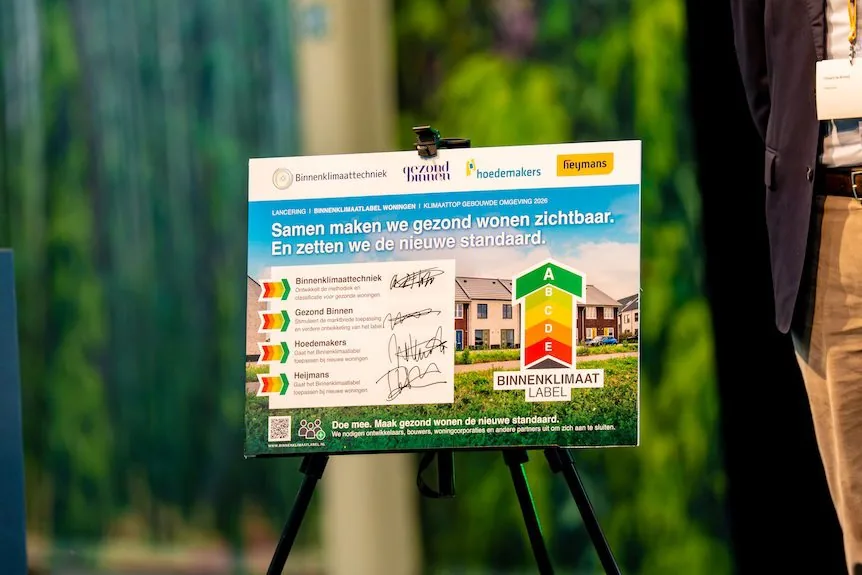
The Stichting Gezond Binnen foundation has introduced a new indoor climate quality label for residential buildings called Binnenklimaatlabel Woningen. The first trials of the assessment methodology are being conducted in pilot homes by Heijmans and Hoedemakers, and the label was launched at the Klimaattop Gebouwde Omgeving conference in Utrecht. The goal of the project is to ensure that the first residential properties receive official certification by 2027, enabling an objective evaluation of indoor environmental quality.
The label is intended to show how well a home meets requirements in four main areas:
- 🌡️ temperature conditions
- 🌬️ air quality and ventilation
- ☀️ level of natural lighting
- 🔇 noise protection
It is emphasized that high energy-efficiency performance does not always guarantee occupant comfort and health. With the label, developers, contractors, and prospective owners will be able to immediately see a building’s strengths and identify areas needing improvement.
Heijmans and Hoedemakers became the first construction companies to take part in refining and implementing the label. Indoor climate parameters are already being monitored in their pilot homes, and the collected data are being used to improve the assessment methodology. Kenniscentrum Binnenklimaattechniek Chair Remi Hompe noted that without measurements it is impossible to improve performance indicators in a targeted way, and that the label translates scientific knowledge into a practical tool for the market.
According to CBS, in 2024 one in five Dutch households faced dampness or mold problems. According to estimates by the World Health Organization, living in damp or mold-affected buildings increases the risk of respiratory diseases and asthma by up to 75%. Foundation Vice Chair Margot de Heus emphasized that the label is intended to make the impact of indoor climate on health visible and to give it an equal place alongside energy efficiency in the design, construction, and operation of housing.