

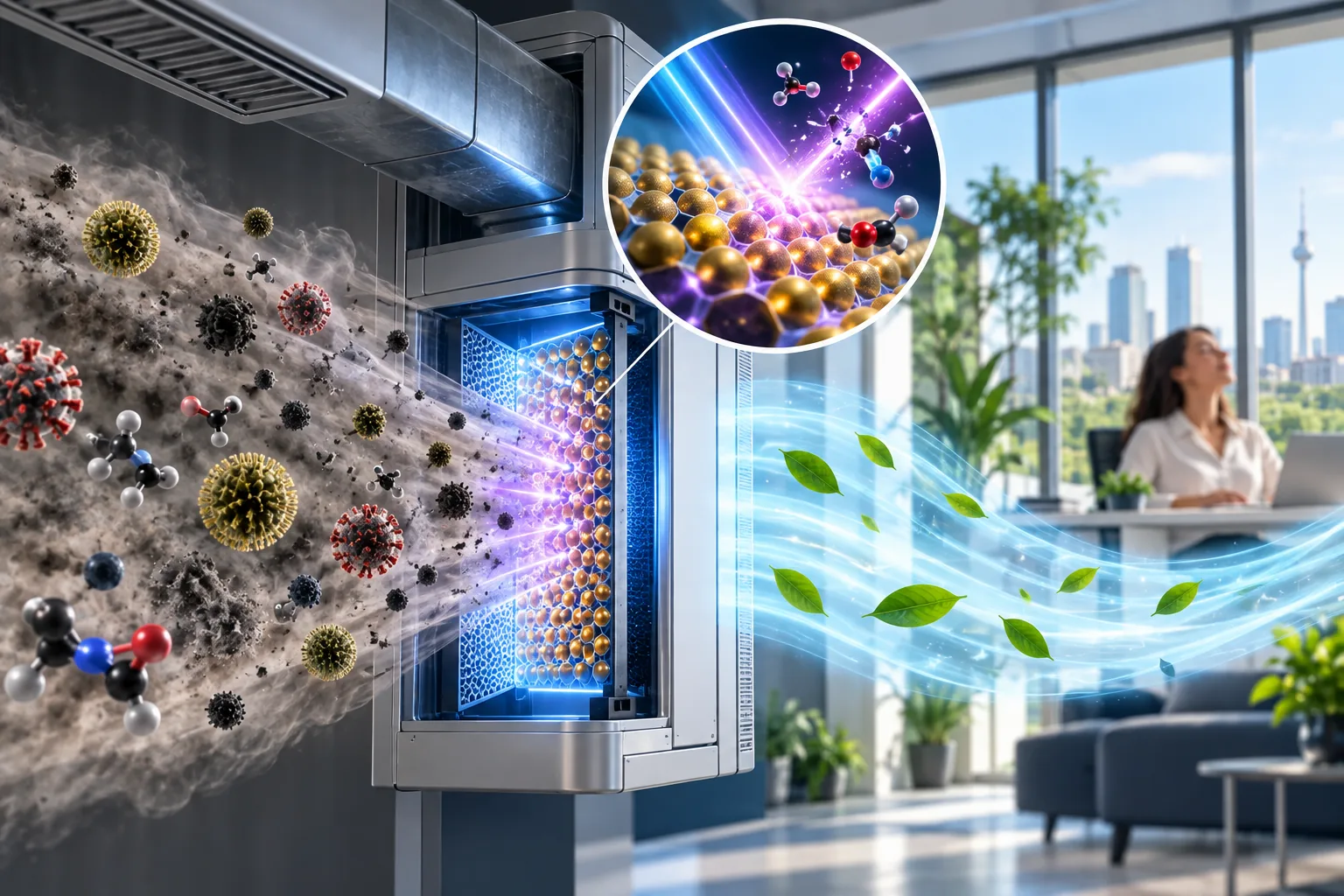
Dr. D. Yogi Goswami, PhD, an engineer with many years of research experience in the fields of energy and the environment, heading the TECO Clean Energy Research Center, presented the results of many years of work on indoor air purification technologies.
Traditional solutions based on:
- HEPA filters
- UV-C radiation
…do not ensure complete removal of viruses, volatile organic compounds, and other biological contaminants.
The PECO technology he developed made it possible to significantly increase disinfection efficiency by acting simultaneously on biological and molecular contaminants, and it became widely used during the pandemic.
The new plasmonic-photonic technology uses:
- nanoparticles
- UV-A radiation
…to neutralize viruses, bacteria, mold spores, and volatile organic compounds.
The system received FDA 510(K) clearance and demonstrates noticeably higher performance compared with previous solutions. Under controlled laboratory conditions, an increase in the reaction rate constant of 60.7 percent was recorded, confirming the acceleration of oxidation processes and the breakdown of harmful substances.
The issue of indoor air quality is becoming particularly acute against the backdrop of:
- global deterioration of ambient air quality due to emissions from the energy sector, transportation, and industry;
- emissions of organic compounds from building materials, floor coverings, and paint-and-coating formulations.
The World Health Organization and researchers studying climate change-related viruses warn about the emergence of new airborne pathogens, including COVID-19 mutations.
Among the most dangerous contaminants ⚠️:
- viruses and bacteria;
- mold and fungal spores;
- allergens, including waste products of dust mites and cockroaches, which trigger allergies and asthma in a significant portion of the population.